Islamic history · 632–1591 CE
History you can see.
An atlas of Islamic history on a living globe. Follow the scholars from city to city, see the empires of their time, and trace who taught whom, with the classical sources beside every step.

What you can do
Three ways to read a life.
Names and dates turned into something you can see, follow and understand.
The world as it was
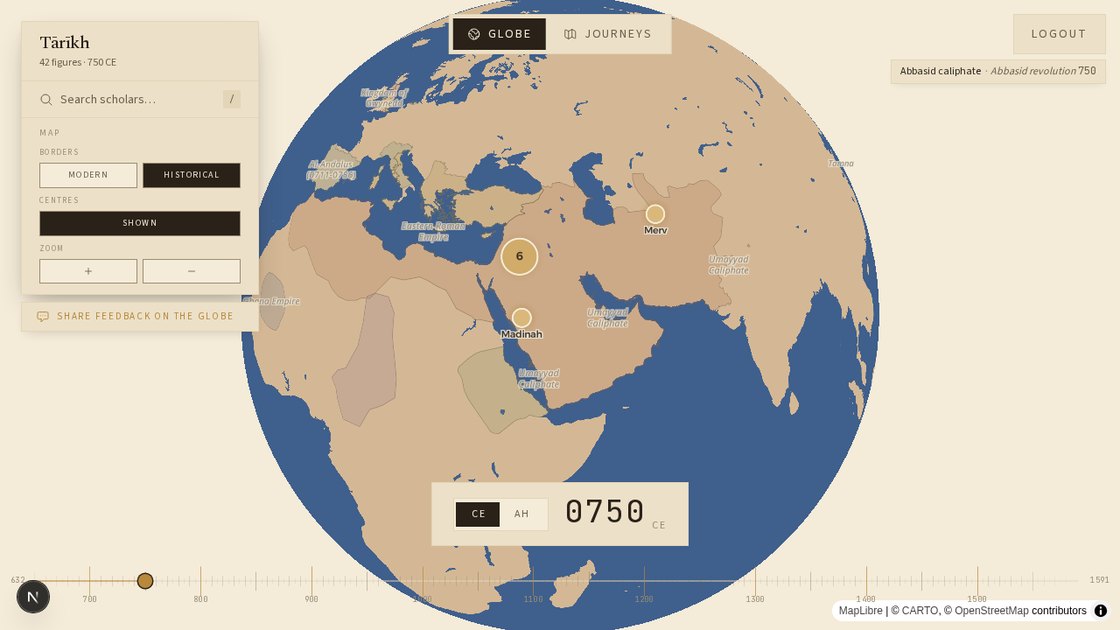
Move the year, and the map follows.
Empires and borders are drawn as they stood in the year you choose, from 632 to 1591, with the scholars alive in it. The right era, not a modern map wearing old names.
Journeys
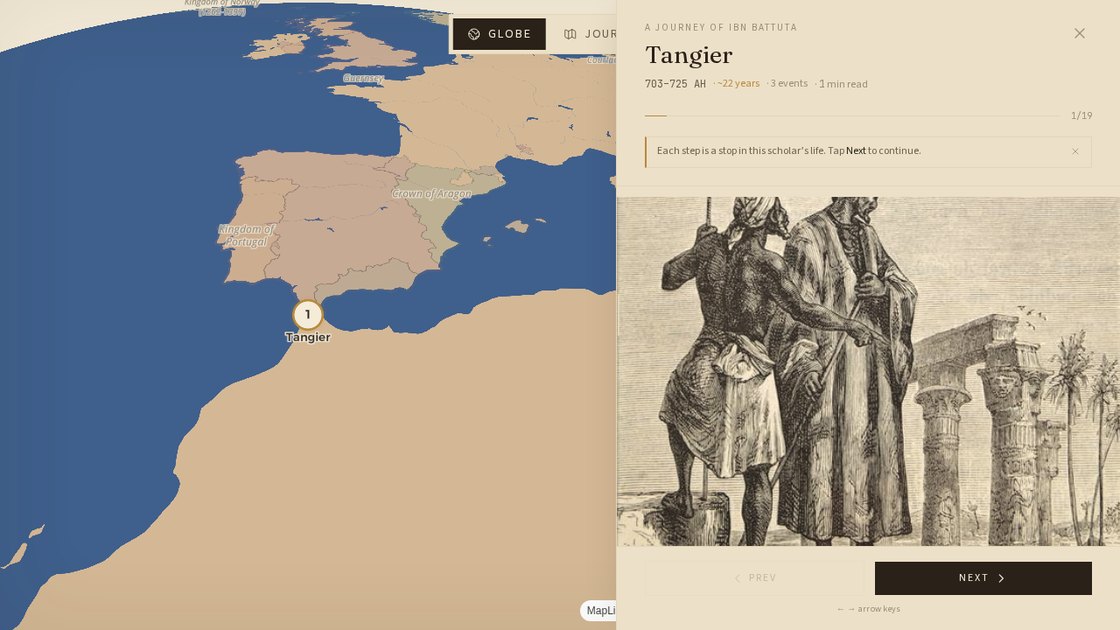
The road, in order.
A scholar's life walked city by city, in the order it happened. The globe carries you to each stop as you read it: here, Ibn Baṭṭūṭah setting out from Tangier.
Chains of knowledge
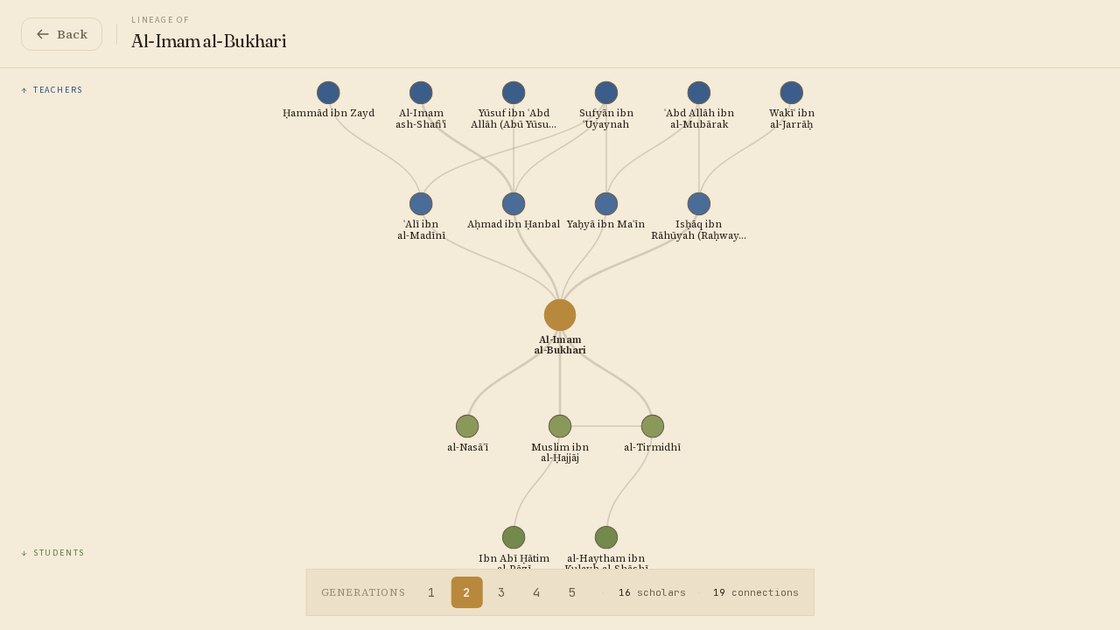
Teacher to student.
Who learned from whom, across the centuries, drawn as a chain of transmission. Every link says how well it is attested, and none is invented to close a gap.
How it is made
Written from the sources.
Tārīkh is read like a book and checked like one. What it says comes from the classical works, and it shows you where.
The passage, in Arabic
Wherever it can, a step sets the classical sources' own words beside it, with the book and page they come from.
Reviewed by historians
A team of historians reviews the journeys, corrects them and keeps them honest to the sources.
Honest about certainty
Where the sources disagree or a date is a guess, the step says so plainly rather than inventing precision.
The Sīrah, in nine chapters, read on the globe where it happened.
Free while in beta
Begin with a journey.
The globe, every profile and every journey are open to you now.